
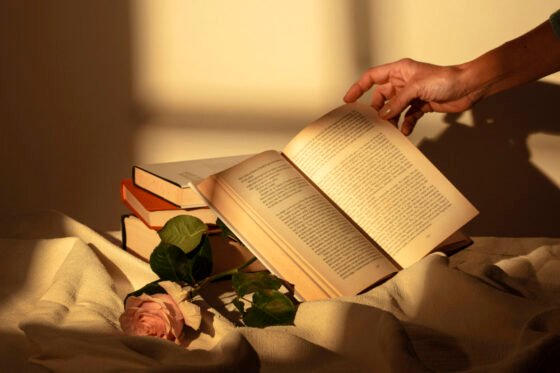
No matter what kind of book you enjoy reading, you are bound to come across tropes. Tropes are recurring plot and character beats present in multiple stories. They sometimes help the reader feel a sense of comfort or familiarity while engaging in them.
For instance, a situational trope would be a hero needing to ‘slay a dragon’ to save the day, or, in more contemporary terms, something like the ‘one-bed’ trope. A character trope would be ‘the chosen one’ or the ‘femme fatale.’ Tropes have existed in books and films for decades, and the need for these has spilled over to how the particular piece of art is marketed too.
For instance, the language, writing, and the skill of the artist takes less precedence than the major tropes present in the novel. A novel can be marketed as an ‘enemies to lovers’ story with a ‘boy next door’ trope. This not only lets the readers know what the primary plot of the novel is, but also helps them evade exploration, sticking to a narrative that is comfortable.
One cannot argue with the fact that these tropes work, as these books sell—a lot. Any major sales or recommendation platform such as Amazon or Goodreads is bound to use tropes while marketing these books; it happens to be the most economically beneficial option.
This, however, can lead to problems. Tropes tend to limit the reader’s perception of the story in a holistic manner; and ensure that the saleability of the text is paramount, far more than the substance of it. The idea of introducing a text via the use of tropes is also quite reductionist: as it allows the book’s ideas to be limited to the genre, and hence, picked up by a limited number of readers.
There is a difference between a book being an ‘enemies to lovers’ romance entirely, or a text with a lot more to offer with the elements of a romance. This hyperbolic existence is not only present in the marketing of a book. It also ensures that other authors continually write such texts, as they can be marketed this way, eventually transforming into sales.
The prospect of a writer censoring their craft only to fit the popular narrative of the texts is quite problematic, for multiple reasons. One, it ensures that stories, those that do not fit established norms of storytelling, are not taken into consideration. Two, it allows a saturation to exist within the various books being published, and pushes certain narratives ahead only.
It is important to recognize this change, and realise that books are being valued not because of their writing, but because of a certain few buzzwords that dictate the sway of the market. The Tiktokification of book reviews does not help either; as readers need a digestible set of words: easy to consume and propagate.
Eventually, this will lead to the simplification of literature. In an already saturated market of books, the use of tropes would lead to writers ensuring their story fits into the typical, cookie-cutter mold, and readers adjusting their expectations on receiving that. The room for experimentation, complexity and change—the true essence of any art form, will wither away.
Whatever the case may be, one has to agree that tropes will remain. Perhaps there will be an overhaul, when creators, marketers and recommendations will change the way they present tropes, with them being sidelined as elements rather than an oversimplification. Regardless, what we know is that books and stories will persist, no matter what.
Follow The Bombay Circle Press for more recommendations of all things bookish!
— Written by Keith Correa