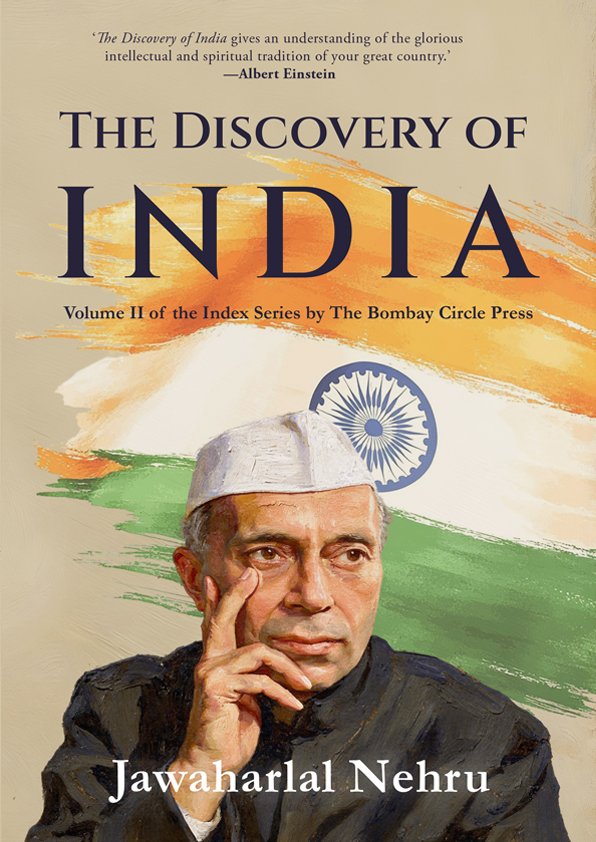
A timeless exploration of India’s history, culture and civilisational identity by one of its foremost nation-builders.
Nehru was an erudite—his knowledge of India’s traditions, history and culture made him one of the greatest leaders in the nation’s history.
The Discovery of India was written by Pandit Jawaharlal Nehru during his imprisonment from 1942 to 1945 at Ahmednagar Fort in present-day Maharashtra by British colonial authorities, when India was at the threshold of independence. First published in 1946, this book remains a modern classic written by India’s first and longest-serving Prime Minister.
The Discovery of India traces the journey of India from the ancient history of her invaders to the final years of exploitation at the hands of the British. Drawing on his knowledge of the Upanishads, Vedas and historical texts, Nehru presents the development of India, beginning with the Indus Valley Civilisation and continuing through the socio-political transformations introduced by successive foreign powers, culminating in the contemporary period of his time.
Imprisoned alongside other freedom fighters such as Maulana Abul Kalam Azad, Govind Ballabh Pant, Narendra Deva and Asaf Ali, Nehru used this period of confinement and intellectual exchange to document his reflections on India’s diverse past. Providing a rich narrative of Indian history, philosophy and culture from the perspective of a leader striving for independence, this book reflects his personal and intellectual exploration of the idea of India.
This book was a successful attempt at capturing our nation’s lasting spirit—with a hope for a brighter future.
Part history, part philosophy and part personal reflection, The Discovery of India remains an essential work for anyone seeking to understand the roots of Indian civilisation and the ideas that shaped a modern nation.
The Index Series by The Bombay Circle Press brings you a curated collection of stories from and about the history of India. From the speeches of Netaji to the empires that shaped Bharat, each volume is thoughtfully compiled and edited by The Bombay Circle Press team.
The Discovery of India is the second volume in The Index Series and presents one of the most influential interpretations of India’s past, written by a statesman whose vision helped shape its future.