


Independent publishers often offer unique, diverse and curated selections of books that the larger ones may overlook. Indian independent publishers excel at finding and publishing beautiful literary fiction that will stay with you long after you’ve read it.
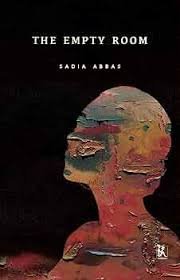
The Empty Room by Sadia Abbas
In 1970s Karachi, where violence and political and social uncertainty are on the rise, a beautiful and talented artist, Tahira, tries to hold her life together as it shatters around her. Soon after her wedding, her marriage is revealed to be a trap from which there appears no escape. Accustomed to the company of her brother, Waseem, and friends, Andaleep and Safdar, who are activists, writers and thinkers, she struggles to adapt to her new world of stifling conformity. Tragedy strikes when her brother and friends are caught up in the cynically repressive regime. Faced with horror and injustice, she embarks upon a series of paintings titled ‘The Empty Room’, filling the blank canvases with vivid colour and light.
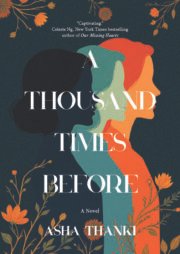
A Thousand Times Before by Asha Thanki
Ayukta is finally sitting down with her wife Nadya to respond to a question she’s long avoided: Should they have a child? The decision is complicated by a secret her family has kept for centuries, one that Ayukta will be the first to share with someone outside their bloodline: the women in her family inherit a mysterious tapestry, through which each generation can experience the memories of those who came before her. Ayukta invites Nadya into this lineage, carrying her through its past. As Ayukta unspools these generations of women—whole decades of love, loss, heartbreak, and revival—she reveals the tapestry’s second gift: the ability for each of these women to dramatically reshape their own worlds. Like all power, both fantastic and societal, this inheritance is more treacherous than it seems.
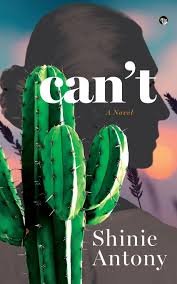 Can’t by Shinie Antony
In an unnamed town lives Nena—surely one of the world’s greatest eccentrics. Water burns her skin, to the extent that she can neither drink it nor bathe in it; she survives on ‘water capsules’ and does her ablutions with a mix of herbs and plants. She speaks several languages and still grieves about the books that were her childhood companions—that her heartless brother had thrown into the river. And she exults in telling stories about her late husband’s affairs—with a laughter that precludes sympathy. Then, in her seventies, she embarks on a journey to track down all her husband’s lovers. The narrator, a boy of seventeen, whom she calls Tata (though that is not his real name) accompanies her on this mission. By journey’s end, he has learnt the most startling truth about her—what it is that she can’t do—and what it led her to do. Laced with humour and a raw wisdom about life, Shinie Antony’s lyrical prose turns this strangely compelling story into a believable fantasy.
 Sunburn by Chloe Michelle Howarth
It’s the early 1990s, and in the Irish village of Crossmore, Lucy feels out of place. Despite her fierce friendships, she’s always felt this way, and the conventional path of marriage and motherhood doesn’t appeal to her at all. Not even with handsome and doting Martin, her closest childhood friend. Lucy begins to make sense of herself during a long hot summer, when a spark with her school friend Susannah escalates to an all-consuming infatuation, and, very quickly, to a desperate and devastating love. Fearful of rejection from her small and conservative community, Lucy begins living a double life, hiding the most honest parts of herself in stolen moments with Susannah. But with the end of school and the opportunity to leave Crossmore looming, Lucy must choose between two places, two people and two futures, each as terrifying as the other. But only one can offer her real happiness.
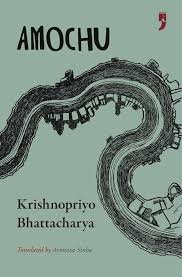 Amochu by Krishnopriyo Bhattacharya, translated by Arunava Sinha
Amochu is a Tibetan-by-race river. Except that its machinations of realpolitik have earned it the title of river-guru. Born in Chomulhori, it transports tonnes of silt and cusecs of water to the sea every day. A near-supernatural primeval tree named Lampati is Amochu’s closest friend. But Amochu is no benign bringer of prosperity and peace. Instead the river hatches a joint conspiracy with the tree to catalyse a transformation in the sapiens civilisation in Tadingdong Valley. Amochu is a literary fictional narrative of this magical reality.
These literary fiction books published by indie publishers in India are unique must-reads. Find more recommendations on The Bombay Circle Press’ bulletin.